
— Car Insurance. Reimagined.
- How to disrupt a well-established industry.
- Preparing for capital investment.
- Wireframes, workshops, UI design.
- Client
- Insurance start-up (under NDA)

01/ Summary

Some of the details in this case study may be vague to protect the client's intellectual property.
- — Services
- Competitive analysis
- Workshop facilitation
- User-interface design
- Wireframing
- Preparing for investment
- Mobile app design
- Designing for iOS
- Developer collaboration
- — Deliverables
- Problem defining workshop
- A fully-detailed journey map
- Wireframes
- User-interface designs
- High-fidelity prototype
- — Outcomes
Working to a tight deadline we delivered a polished prototype which was used to demo to potential investors.
Thanks to close developer collaboration, the prototype, and an iterative approach, the client produced a proof-of-concept iOS app.
02/ Understanding the problem
Deciding which services to use
The client knew the problem but didn’t fully know the solution. They were seasoned in the car insurance industry, from developers through to risk-setters and wanted to start fresh. The first challenge was to deeply understand the problem and work out how to solve it, together.
Hard deadline
With an insurance convention in America fast approaching, the client didn’t want to miss a key opportunity to present their product to potential investors. This shaped which services to provide to the client. Being lean was key. We had to approach it iteratively and cut out complexity.
The customer journey and graphical design processes were very straightforward for us.
Technology Leader & Strategist
Looking at the industry
The competitive analysis gave us an insight into how other car insurance companies and comparison websites approach the quotation journey. The client wanted to rip up the rule book and look at every question in detail. We began to identify our differentiators and where others were failing.
Getting everyone together
Taking learnings from the Design Sprint methodology, we ran a series of mini-sessions to delve deeper into the problem. The client had an idea of how to solve the problem, but we took the time to dig even deeper first. We focussed on mapping out the current experience and identifying customer pain points, goals and risks.
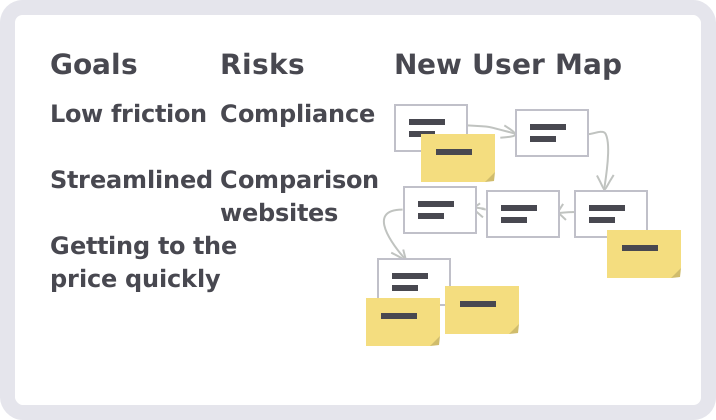
Starting to map
The workshops accelerated progress on the project. Getting everyone in the room at the same time meant we didn’t need endless meetings or calls. Gathering technical, legal, risk, design, analysts, and insurance experts all together meant we were all on the same page from the off.
03/ The Solution
Focussing on process
Unfortunately given the business-sensitive nature of this project I can’t share as specific details. The client is currently seeking investment to bring this product to market, and as soon as any update on that happens I’ll update this case study.
The journey of acquiring car insurance was designed from the ground up, with some exciting new ways and I can’t wait to share them with you. It will shake up a well-established industry.
Being different
We leveraged the latest in iOS capability to design an extremely streamlined and simplified car insurance journey. We worked with the people who set the car insurance quote prices to look at every question in detail.
A quote journey right now may ask upwards of 60 questions! We wanted to start by asking one question and work from there until we had everything we needed. And then work out the best way to capture that information from the user.
Taking the client on a journey
The client had a solution in mind, a flow that they already wanted to explore. At first glance, it seemed extensive and simple. We dug deeper.
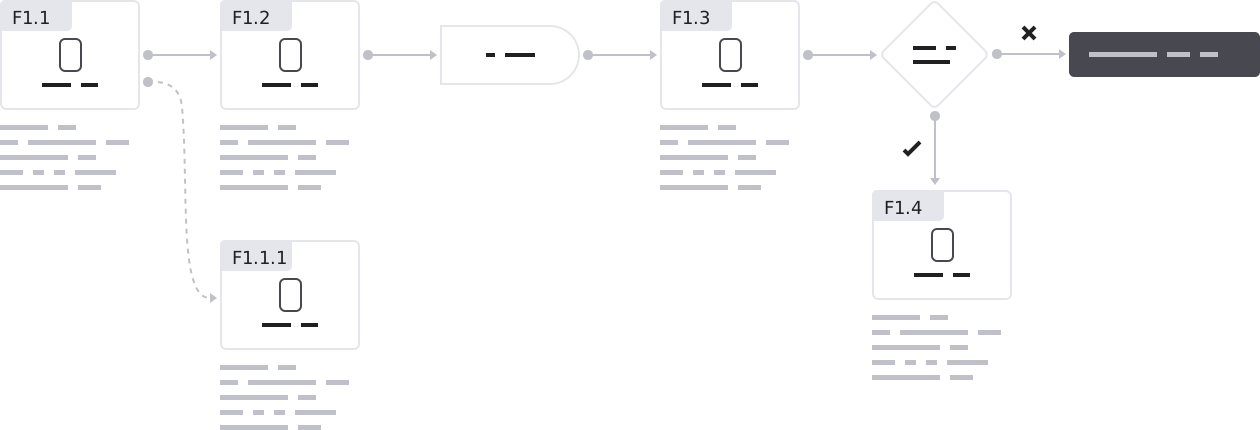
Making something look simple is easy. Making something simple to use is much harder.
Reimagining the journey
On the face of it, the client’s journey seemed simple. We uncovered the complexity behind the flow and began to expand the map. This allowed us to hide this complexity from the user and provide them with a simple and easy to use product.
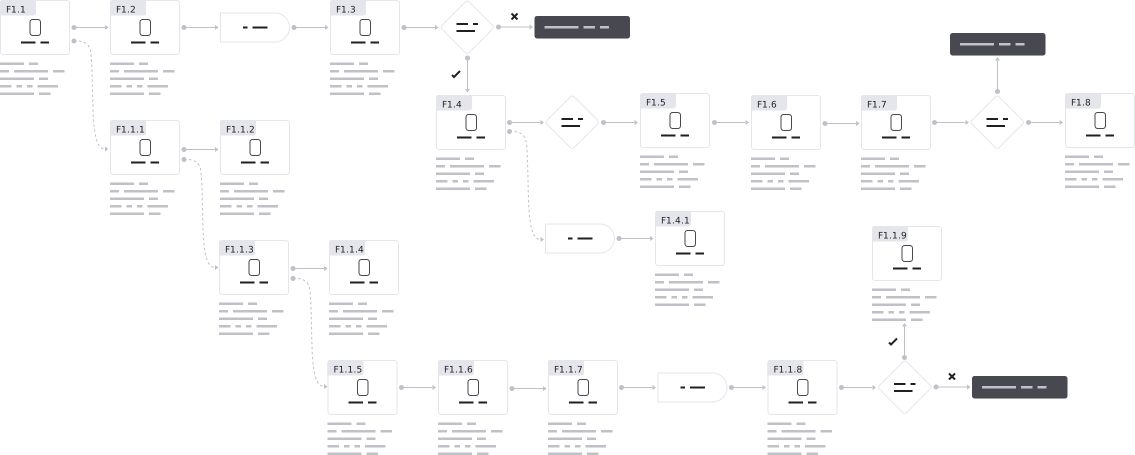
Map, simplify, and repeat
Together with the client, we spent a good proportion of time iterating over the journey map. It’s super important to build a strong journey foundation before even thinking about layout. We would go on to use this map throughout the whole project to aid conversation, support the developers and act as a springboard to quickly produce the final wireframes. To produce the map we utilised a mixture of workshop sessions and remote calls.
Working with branding
Given the accelerated timescales of this project, we didn’t have the luxury of waiting for a fully-designed brand. We had to make some branding decisions during the UI design phase knowing full well we would have to change it once the brand work became ready. This is why creating solid wireframes was crucial to the success of this project.
Wireframes
Outlining all of the information required at each step allowed us to be UI design agnostic. We didn’t have to make strongly opinionated design decisions and could move quickly to build up the page templates. Working in this way also allowed us to be lean. We could create a wireframe and share the layout idea with the client quite rapidly; thus avoiding timely work associated with well-finessed UI design.
Lean
One of the project principles was to be lean. To produce just enough of a designed project to prove a theory. The client wanted to build a working prototype in iOS and needed a prototype from us. The prototype served two purposes: one to support the developers, and two to act as a fall-back to demo to potential investors. We first thought about the happy path deeply and got this to a place we were all happy with. Not forgetting about the sad paths, we give these just as much attention. Users don’t know they’re taking a path you didn’t want them to, so the design quality can’t taper. Working iteratively and simplifying the design allowed us to achieve these goals.
04/ Outcomes
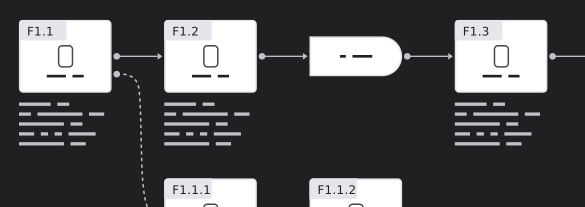
Most discussions in the initial phase of the project focussed around this map. It was used to design the user-interface and produce the prototype. The developers used this map to create their proof-of-concept iOS app.
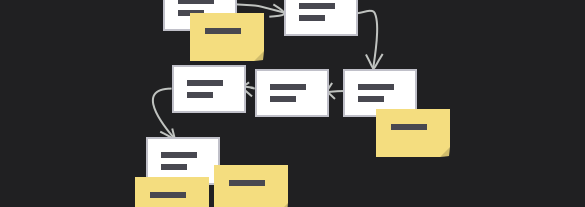
I’ve written here about how important it was to have everyone in the room at the same time. It kept the decision loop short, and more importantly quick. Not only this, but it gave us a chance to all get energised and start to get excited about solving the problem ahead!
The prototype was delivered under time pressure to be able to pitch the product to investors. It was also used for the developers to base their proof-of-concept iOS app from.
This link will become active once I’m able to share it.
Their developers used the prototype we’d designed to create a proof-of-concept iOS app. They are currently seeking investment for the product.
This link will become active once I’m able to share it.
05/ More Case Studies
Available from January 2027
Looking for a product, service or design systems leader?
I'm open to product design, service design, design systems and design leadership roles. Remote anywhere, or hybrid across the UK.